How do we monitor fisheries to know if seafood is sustainable? It turns out WHERE we monitor is just as important as HOW MUCH we monitor. The “where” needs to be codified in fisheries policies if we want a reliable picture of what is caught.
In this new report with The Nature Conservancy we explore the implications of different ways of monitoring a fishery, especially with modern electronic monitoring (video) tech. The problem is that current policies might say “Monitor 30% of fishing activity”, but they are not specific about how that 30% is allocated.
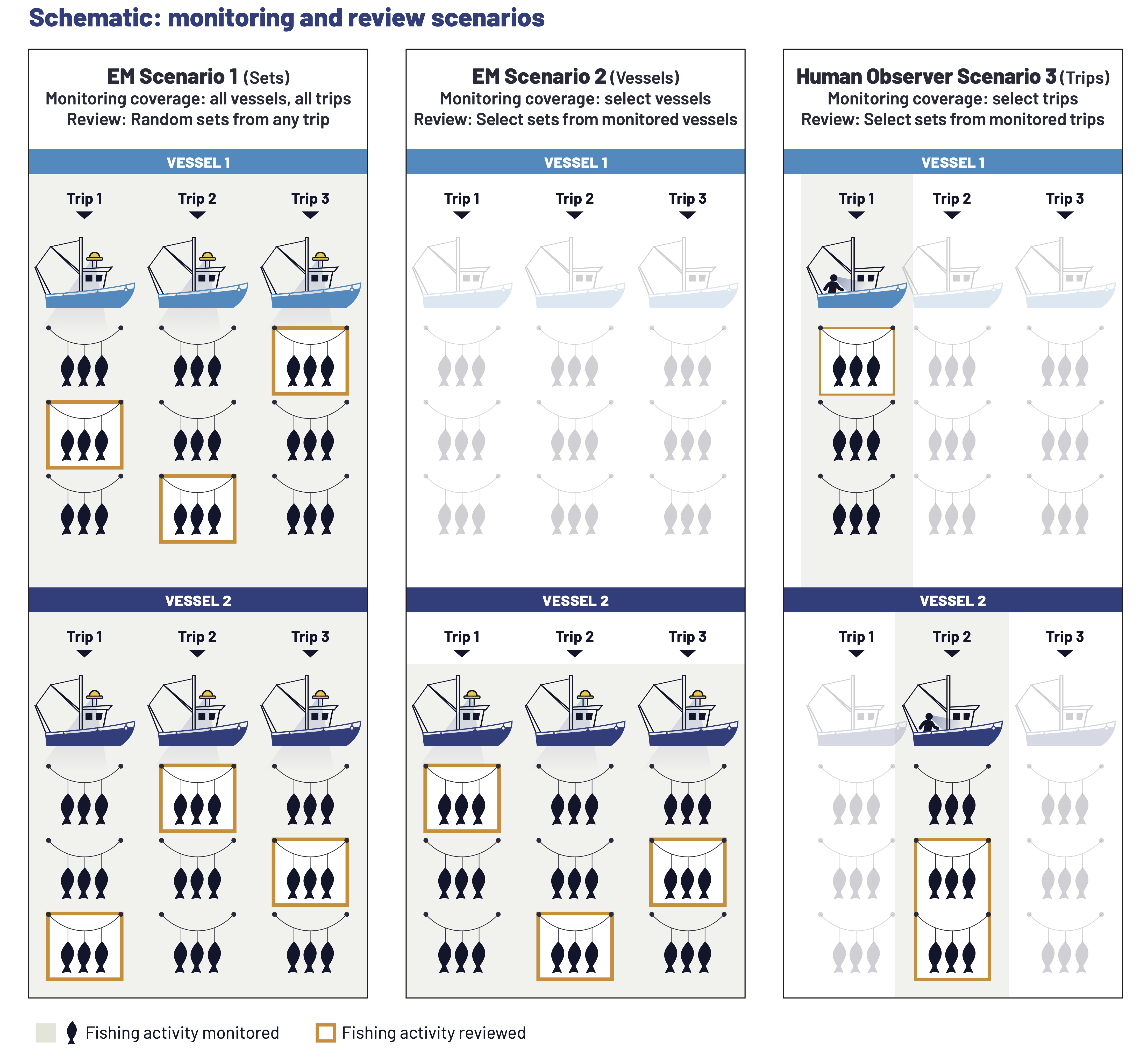 Figure Different monitoring protocols, we recommend monitoring all vessels and then sub-sampling your 30% randomly, to get an unbiased estimate of catch and bycatch.
The most reliable data is provided when you have cameras on every vessel, then sample those videos at random. But ‘monitor 30%’ could also be interpreted as 30% of vessels or 30% of fishing trips. The 30% you see might be the best 30% and you miss high bycatch of threatened species in the other 70%, for instance.
Read the report to learn more.
It was great to work with Vienna Saccomanno and Ben Gilmer from TNC on this question, which comes down to using ecological statistics to solve a real policy issue.